
How surf
coaching works
at Mantra.
Good coaching starts with understanding the surfer. At Mantra, instructors consider your experience, confidence and the ocean conditions, then help you develop through clear instruction, guided practice and practical feedback.
Every Mantra surf course welcomes complete beginners. If you have surfed before, your coaching is adapted to the skills you already have.
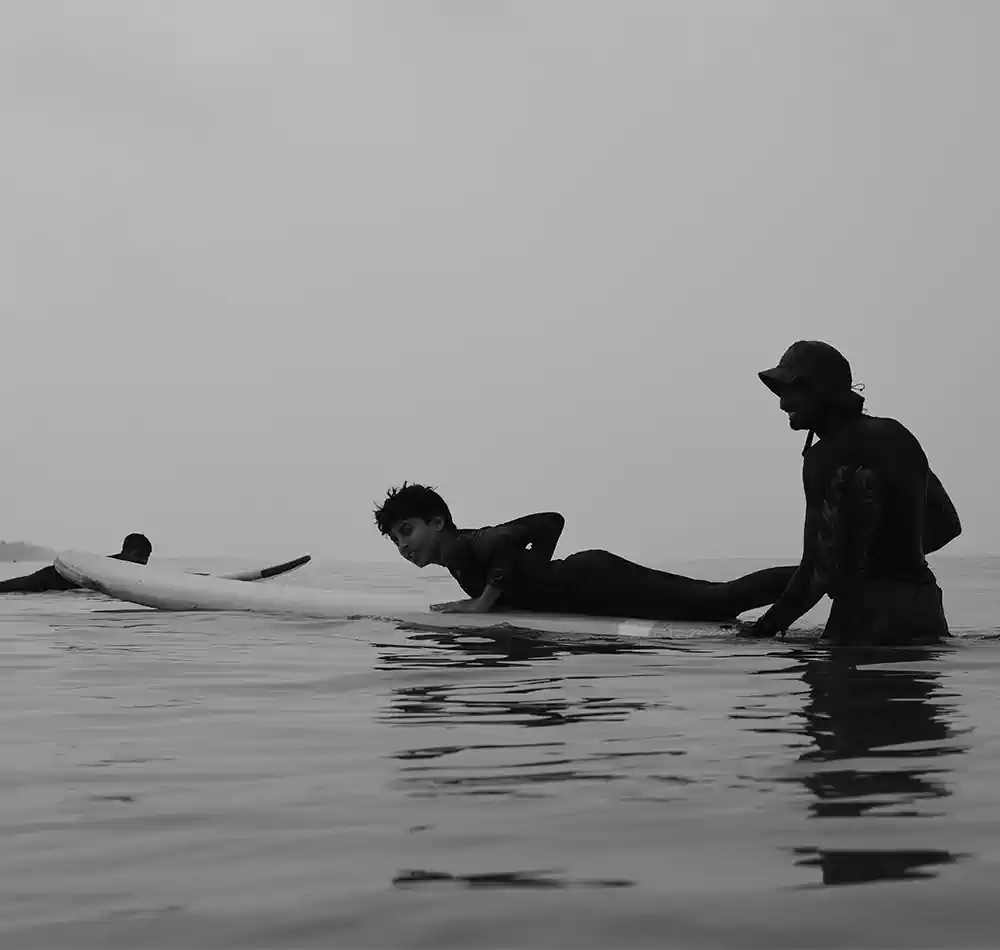
Real-time guidance, repeated practice and adjustments as conditions change.
Improve.
Ocean awareness
Clear instruction
Guided practice
Personal feedback
Coaching that responds
to the surfer.
No two surfers learn in exactly the same way. Our instructors combine observation, explanation, demonstration and feedback, adapting their guidance to the person in the water.
These elements work together, not as a fixed sequence repeated in every session.
Guide clearly.
Instructions and demonstrations are adapted to the surfer's ability and the conditions.
Observe
We consider your experience, swimming confidence and goals, then watch how you move and respond in the water.
Explain
Instructors break down the next skill into clear actions, helping you understand what to do and why it matters.
Demonstrate
When useful, coaches demonstrate movements on land or in the water so you can see what to work towards.
Practise
You repeat the skill in suitable conditions, developing familiarity through guided attempts and time in the water.
Review
Your instructor helps identify what worked, what needs adjustment and what to focus on during the next attempt.
Progress
As your skills develop, coaching can move towards better positioning, board control, wave selection and independent decisions.
The coaching adapts.
Experience, confidence, comfort in the water and individual goals.
Waves, wind, tides, currents and the safety of the surf environment.
The next useful skill to work on, without overwhelming the surfer.
The goal is not simply to help someone stand on a board.
Learning to surf also means understanding the ocean, developing control and making better decisions. These skills grow through practice and experience.
Explore the Surfing Journey
From first skills
to better decisions.
Surfing develops through practice, feedback and time in suitable conditions. These three areas show how your skills can develop as you gain experience.
They are not compulsory course levels or a fixed timetable. Coaching always starts at your current ability.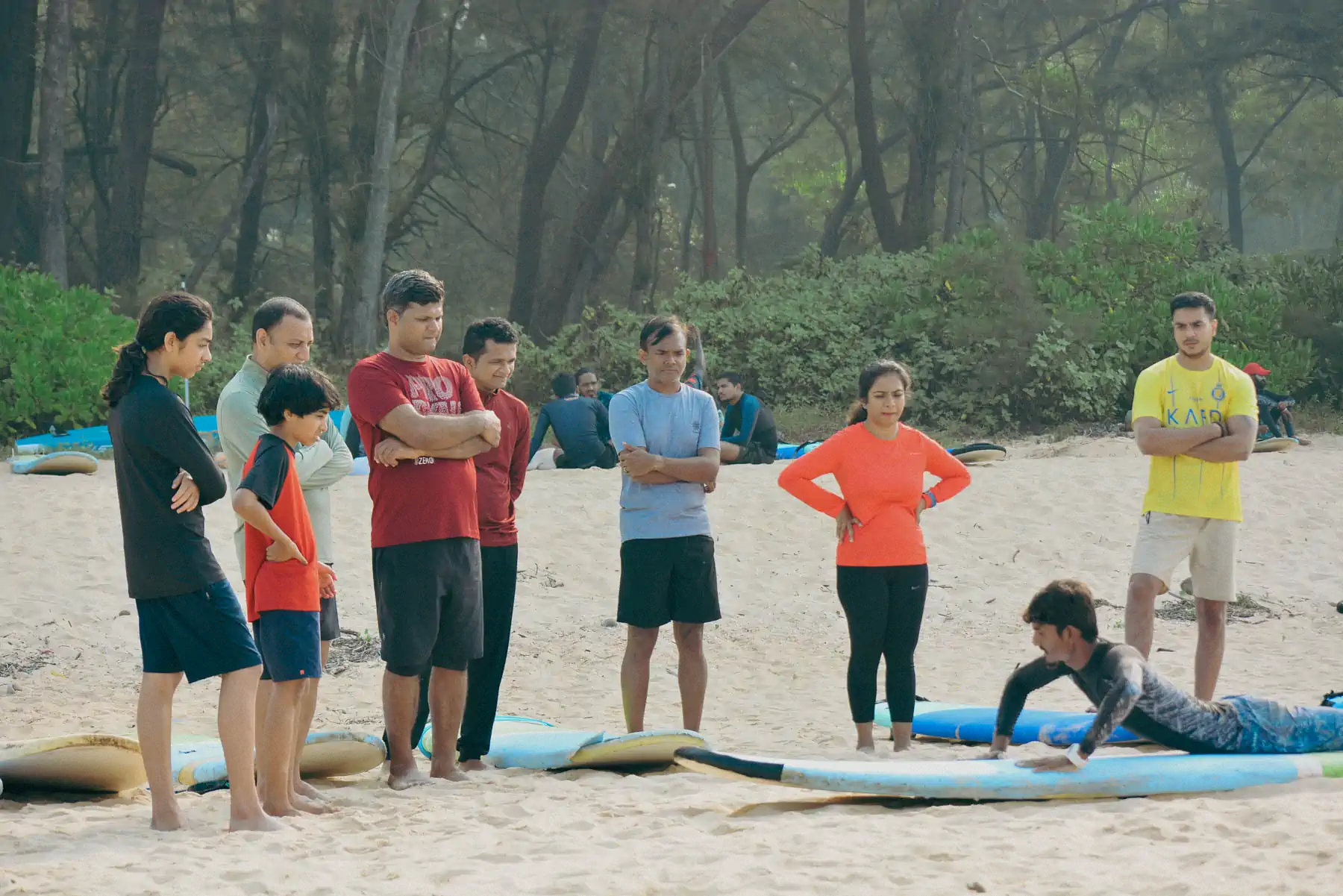
Start with control.
For a first-time surfer, this means becoming familiar with the board, understanding body position and practising the movements needed to catch and ride waves.
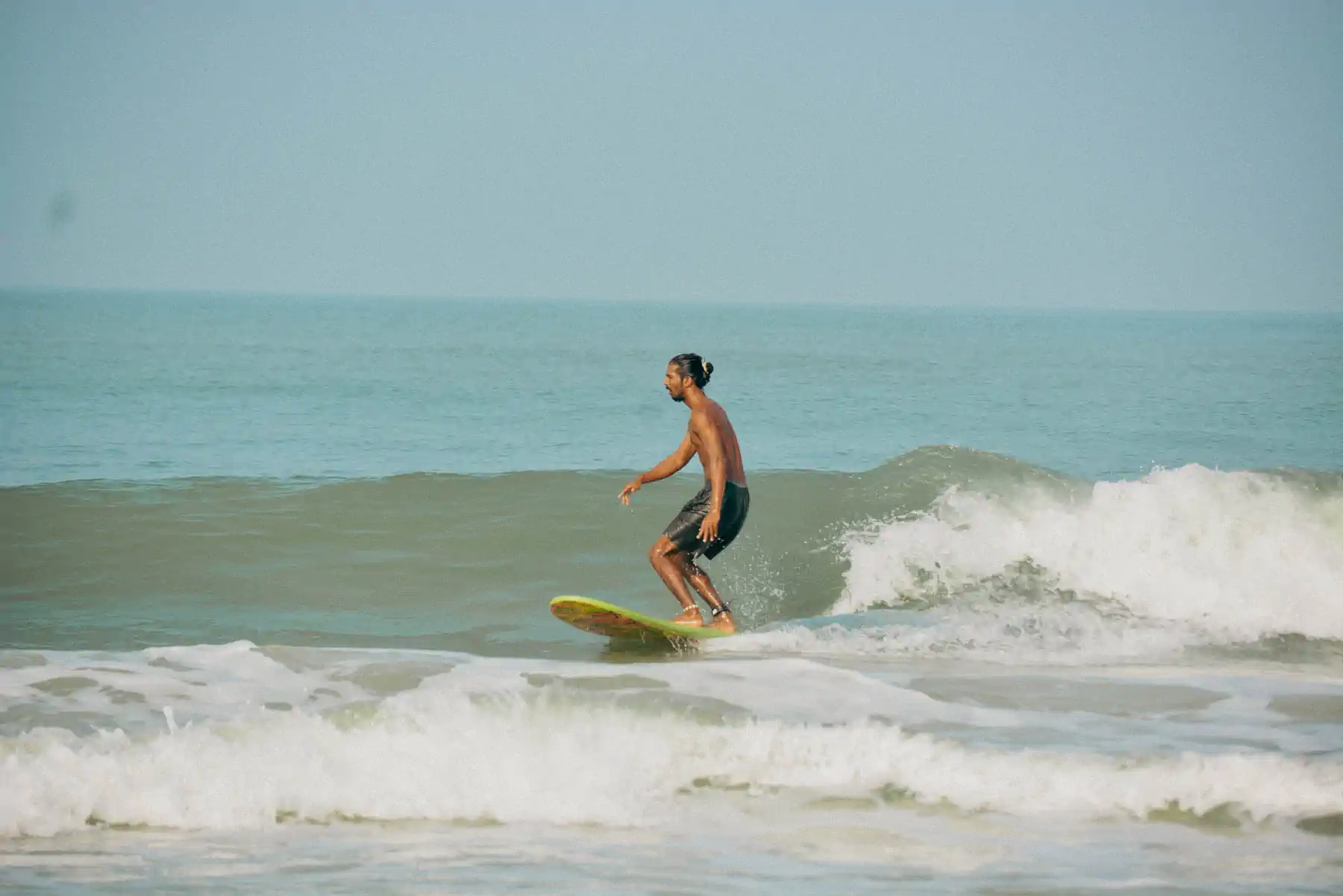
Work with the wave.
As your skills develop, coaching may focus on catching unbroken waves, improving take-off timing, choosing a direction and maintaining control while riding.
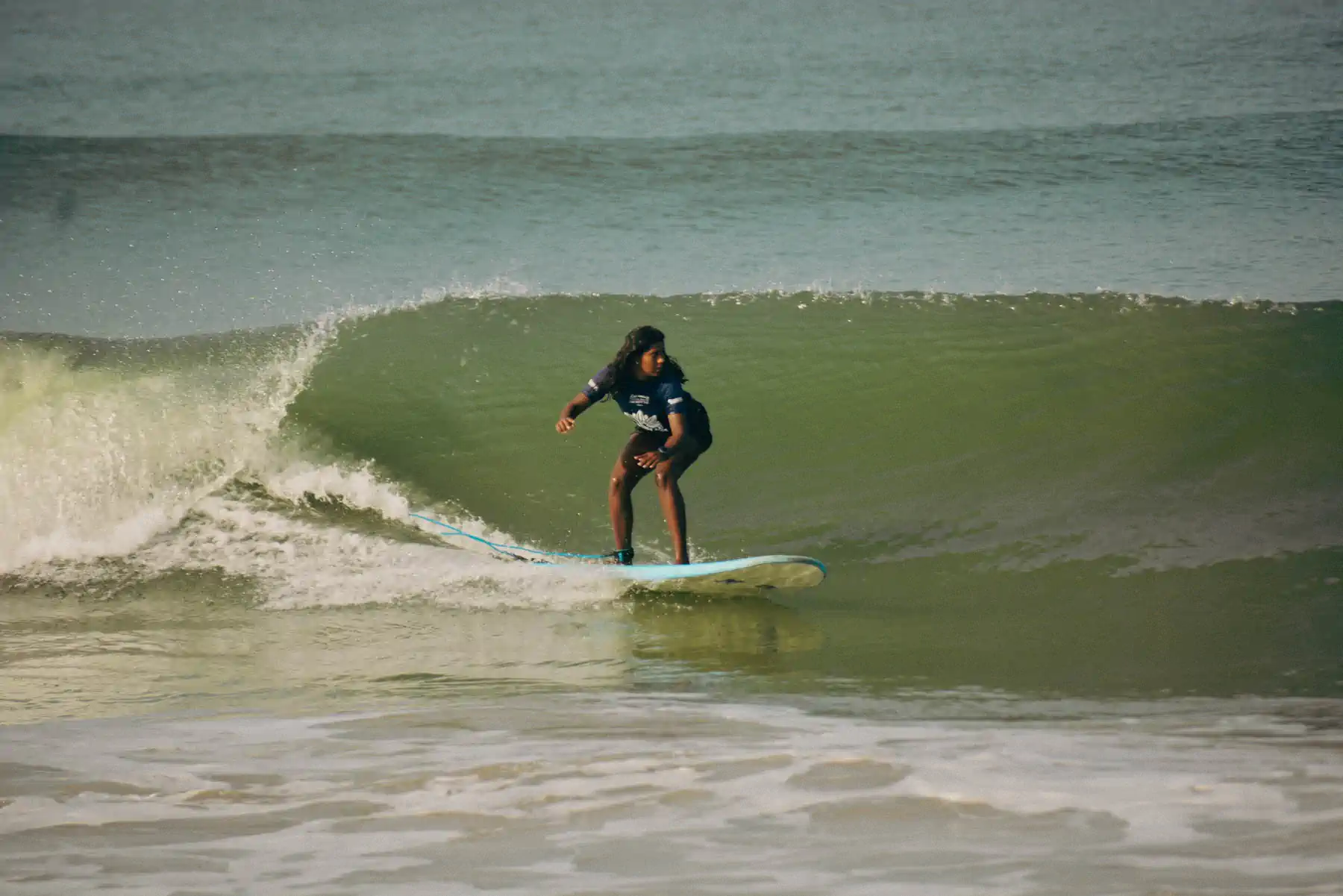
Read. Choose. Adapt.
With experience, surfers can develop the judgment to assess conditions, choose suitable waves and adjust their approach with less direct guidance.
Returning to whitewater, using a larger board or revisiting a simpler movement can be the right choice. Progress depends on your ability, practice and the conditions on the day.
Explore the Knowledge Tree
Understand surfing.
One topic at a time.
Explore the movements, equipment, waves and decisions that shape every surf session.
Choose a category. Open a topic. Learn more.Start with the essentials.
Get familiar with waves, board movements and the techniques used in early surf sessions. Explore these lessons in any order, whether you're starting out or revisiting the basics.
Make better decisions.
Learn how to share waves, select suitable opportunities and practise with greater awareness and purpose.
Understand what is moving.
Waves, wind, tide and currents constantly reshape the surfing environment.
Know the board beneath you.
Understand how board design, equipment choice and body position affect balance, control and progression.